
Don’t buy a Bunnings kit home before you’ve read this
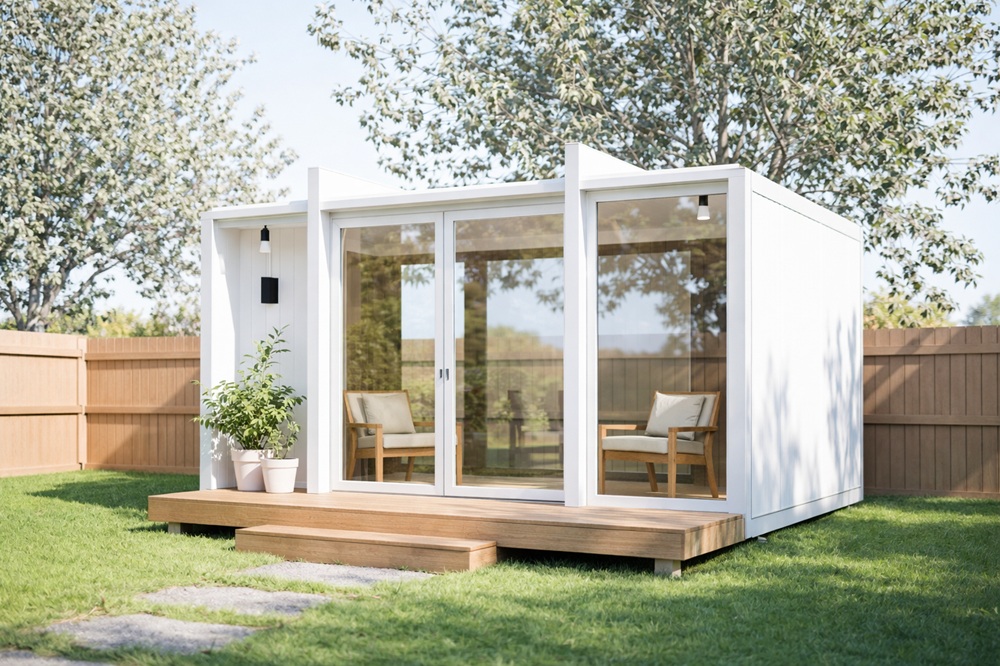
Bunnings kit homes have taken off because the design uses clean lines, modern finishes and it comes at an affordable price. On paper, they’re offering an attractive package. Order a kit home, assemble it in your backyard, and you’ve got an extra room, without a too much effort.
It’s marketed as a low-cost alternative to traditional building, but this is where the confusion comes in. Before you commit, make sure you’re looking at the overall pricing and not just the kit price. Installation cost, laying foundations, trades, approvals, and fit-out are but a few to keep in mind.
Here’s what you should consider.
Installation concerns
Not everyone will have the right skills to get the job done.
Even if the kit is designed to be assembled, that doesn’t mean it’s realistic for the average Australian. You’re dealing with structural components, weatherproofing, alignment, fixings, and tolerances that matter to the long-term feasibility of the structure.
If not done correctly, it can lead to:
- water damage and ongoing leaks
- doors and windows that don’t seal properly
- premature warping or movement
DIY time can add up quickly
Many might be underestimating the timeline. What looks like a “weekend project” can drag on longer if you are working with limited tools, assembling on uneven ground, all while trying to coordinate trades around your progress.
What about laying a foundation?
Before you even think about the walls and roof, you need to answer:
- What foundation type is required for your soil and site? (Concrete slab, piers, or footings)
- Is the site level, accessible, and properly drained?
- Will you need excavation, retaining, or stormwater management?
- Who certifies that it’s been done correctly?
In many cases, the foundation becomes one of the biggest cost and complexity items, especially on sloping blocks or tricky access sites.
You’ll likely need additional professional services
Your Bunnings pod home won’t become a fully functional space without services. That’s why some of the following trades are non-negotiable.
Electrical
If you want lighting, power points, heating/cooling, or internet, you’ll need a licensed electrician. That also typically means:
- running cables from your main switchboard
- potentially upgrading circuits
- compliance and safety checks
Plumbing
The moment you want a toilet, shower, or sink, you’re in a different world of complexity and approvals.
Plumbing often involves:
- water supply connection,
- sewer connection (or an approved alternative system),
- correct falls, venting, and inspection points,
- waterproofing requirements (especially bathrooms/laundries).
In other words, your pod can be a simple studio or extension until you try to turn it a true living space.
Planning and building permits – not always simple
Some kit/prefab backyard structures are promoted as being easier to approve than a traditional build. Yet, it doesn’t mean you will have a permit-free experience.
These types of prefab or modular home structures are designed to reduce approval complexity, but whether you need planning approval, a building permit, engineering sign-off, or inspections depends on your site and your council. Zoning, overlays, setbacks, total floor area, intended use (studio vs accommodation), bushfire ratings, and service connections can all trigger additional requirements.
Before you buy your Bunnings kit home, please confirm what’s required for your property. Don’t just rely on what your local Bunning’s sales agent tells you. Check directly with your local council so you understand the approvals pathway, the realistic timeframe, and the full compliance cost.
It’s not really suited for full time living
A big reason these products get attention is because Australians are actively searching for affordable housing alternatives. These kit homes feel like a shortcut around rising rents, construction costs, and long build times.
Yet the fact is, many backyard pods are designed primarily as an auxiliary space, not as a primary dwelling.
That matters because full-time living usually requires more than a nice-looking structure such as:
- compliant insulation and ventilation
- heating/cooling that’s practical and affordable to run
- proper moisture control
- legal occupancy conditions
- safe and compliant wet areas
- durability under continuous use
These pods can be excellent for a home office, backyard studio or a teenager’s retreat. Buyers simply need to keep in mind; they won’t solve the current housing issue in Australia.
Quick summary: what to do before you buy
Before committing, make sure you can answer the following:
- What is the total installation cost, including foundations and trades?
- What approvals are required for your specific address?
- What is the intended use such as studio vs accommodation vs full-time living, and is that permitted?
- What is included vs excluded (insulation, internal lining, flooring, windows, electrical, plumbing)?
- What warranties apply, and what installation conditions must be met?
If you want a real home, choose Aussie Bush Cabins instead
We’ve built over 40 cabins to date, with many satisfied customers living full time in their new modular homes. Our cabins come fitted with everything you need, electrical connections, plumbing, a fully functioning kitchen, air conditioning, insulation, a solid steel structure – all build with long-term living in mind by our expert team of builder. We guide you through the entire process, from start to finish, including all planning and building permits.
See all the different ranges of modular homes we have available here.
Or call us for more information on 08 6401 5848.