
What are the steps to buying a modular home
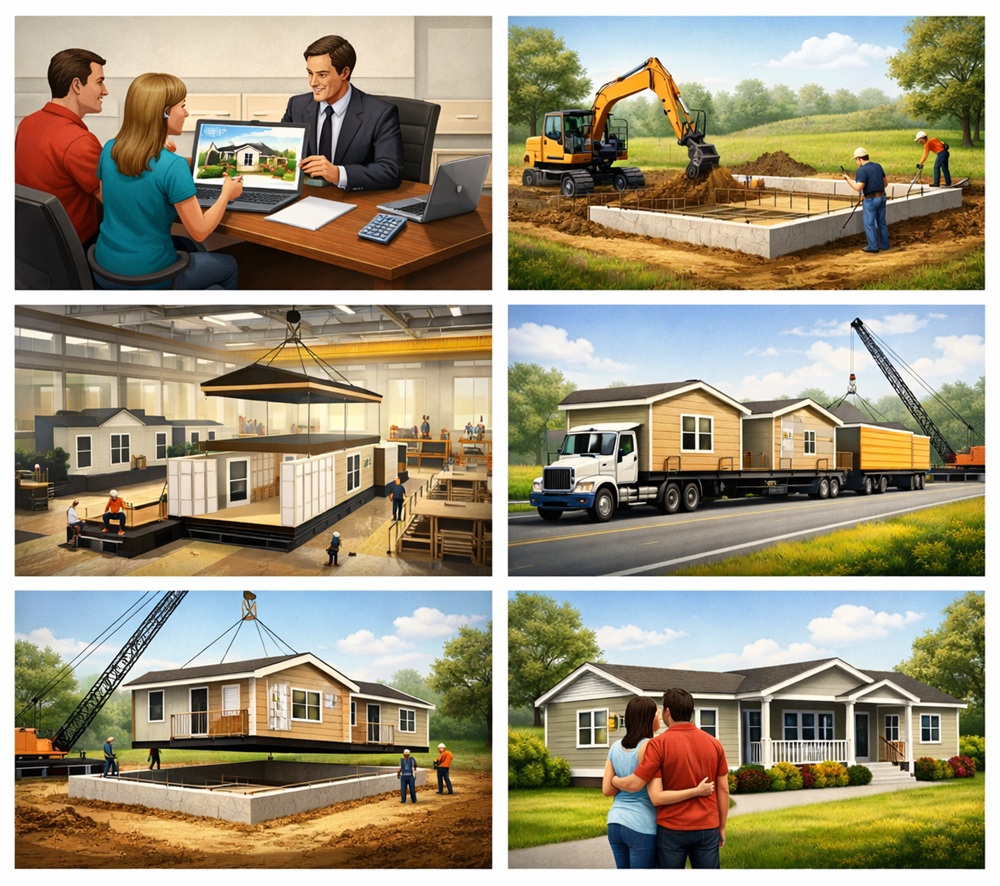
Buying a modular home is usually faster and more predictable than a traditional build, but many buyers are unsure about the process, approvals and total costs. Understanding each step helps you avoid delays, manage your budget and move forward with confidence.
Below is a roadmap showing exactly what the steps are to buying a modular home.
Step 1: Getting clarity on why you’re buying
Before you begin, it’s best to define the purpose of your modular home. For example, do you want to use it for:
- Extra accommodation for family such as a teenager, or as a granny flat
- Home studio or office use
- Farm worker accommodation
- Holiday cabin
This one step influences everything else such as floorplan, insulation, storage, accessibility, finishes and more. Write down your must-haves.
How many bedrooms do you need
Do you require a bathroom, and if so, how many
What about outdoor space? Do you need a decking area? This planning stage plays a key role in the overall modular home process and will influence your design, budget and approval requirements later.
Step 2: Choose a base design and customizations
Many buyers start with a standard range and then modify it. This keeps design costs down and speeds up the design stage.
When comparing suppliers, ask what’s included as standard vs. what’s an upgrade. A typical standard inclusion list can cover planning/documentation, structural base, wall/roof system, insulation, internal linings, windows and doors, electrical, plumbing fixtures, hot water, and floor finishes.
Upgradable options can be extensive. It generally comes down to what fits within your budget, while still complying with local regulations and delivering the level of comfort and durability you expect.
Common upgrades include additional windows/doors, upgraded appliances, higher-spec internal finishes, storage and cabinetry changes, and external additions like patios, decks, or steps.
Many buyers also adjust standard layouts to better suit their needs. You can learn more about how modular homes can be customized in our detailed guide.
At Aussie Bush Cabins, we have a full catalogue of cabins to choose from.
Step 3: Initial enquiry & consultation
The first real step with a supplier is usually a conversation about your needs and your site, often helped by a concept drawing/sketch.
When working with Aussie Bush Cabins, we recommend visiting the workshop with your concept drawing so the team can discuss the best way forward.
This also gives you the opportunity to see builds in progress and understand construction quality before moving forward.
What you should be ready to discuss:
- Your site location and access (can trucks get in? is there turning room?)
- Intended use (owner-occupied, family member, rental)
- Preferred size/layout
- Rough budget and timeframe expectations
Step 4: Concept design & initial estimate
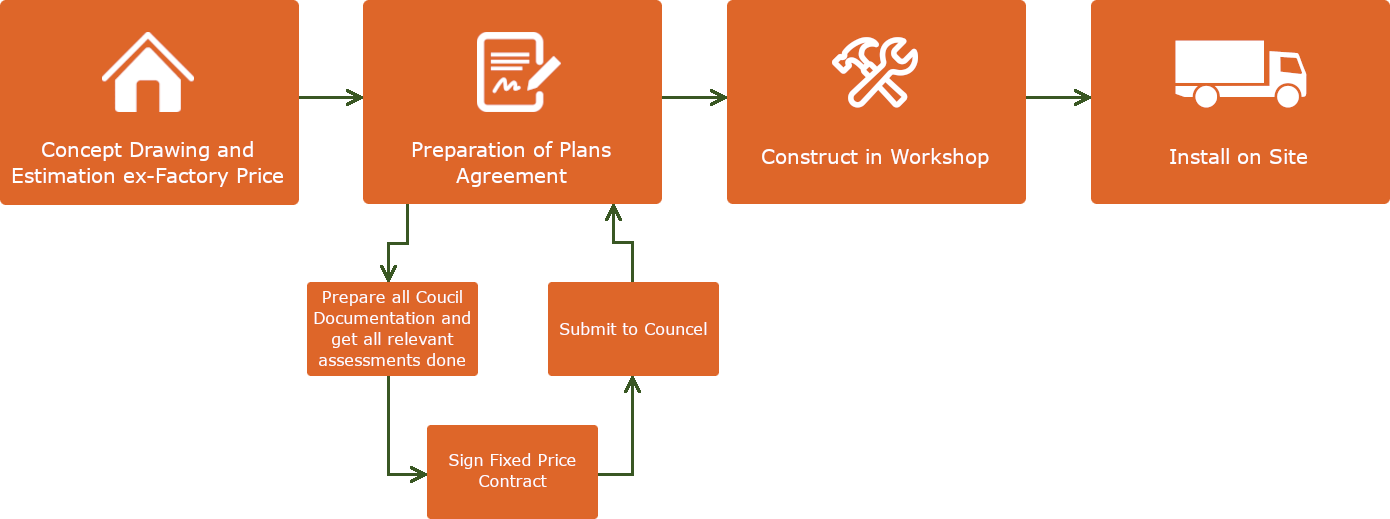
After the initial consult, you typically receive a concept plan/drawing or a refined layout together with an initial estimate.
With Aussie Bush Cabins, a free concept drawing and estimation can be provided soon after the workshop discussion.
Here you can spot issues early and make smart adjustments before you lock in approvals and a contract. It’s also where you should pressure-test the true project cost, especially site works, service connections, and approvals so you’re not caught off guard later.
This is one of the most important steps to avoid unexpected costs. Many buyers underestimate site preparation, service connections and access requirements, which can significantly affect the final price.
Step 5: Sign a design agreement so approvals can begin
Once you’re happy with the concept direction, the next step is the formal design and documentation stage.
With Aussie Bush Cabins, you’ll be signing a Preparation of Plans Agreement, where we gather documentation and prepare for council approvals.
What typically happens here:
- Finalising the working drawings
- Gathering site details required for approvals
- Confirming constraints (bushfire, wind rating, energy requirements, etc.)
- Coordinating any engineering needed
Step 6: Approvals and compliance requirements
Even though modular homes are manufactured offsite, the level of approvals you’ll need depend on various factors such as:
- Your local council/shire
- Zoning and intended use (habitable dwelling vs. non-habitable)
- Site constraints (e.g., bushfire-prone areas)
- Services (septic, power, water)
At Aussie Bush Cabins, we prepare the required documentation for council approvals, and once those approvals are received, we move forward to the next stage of your build.
Delays often happen at the council/shire stage. At Aussie Bush Cabins, we work to minimise hold-ups by gathering the required documentation upfront through our Preparation of Plans Agreement, preparing the plans and supporting paperwork, and guiding you on what information we need from you early one.
Step 7: Lock in the build with a fixed price
Once the design is final and the scope is clear, we move to contract.
At, Aussie Bush Cabins we provide a Fixed Price Contract, which can also be used for finance approvals if required, making it a key milestone before construction begins.
It’s best to note the following before signing:
- What is included in the contract price
- What is excluded in the contract price
- Deposit and progress payment stages
- Estimated build time and what can affect it
Step 8: Pre-start meeting
After approvals are in place, you typically have a final confirmation meeting.
At Aussie Bush Cabins, once council approvals are received, a Pre-Start meeting is scheduled where you choose colours, and then we start building and prepare the site for installation.
What’s normally confirmed here:
- Final internal/external colours
- Fixtures and fittings selections
- Any last design tweaks (ideally minimal changes here can cause delays/costs)
- Site readiness checklist and installation date planning
- This is also where final customization decisions are confirmed, including colours, finishes and layout adjustments.
Step 9: Manufacturing / building (offsite)
Now your modular home is built in the factory/workshop under controlled conditions.
What you can do during this stage:
- Confirm any compliance paperwork you’ll need at handover
- Plan insurance and utilities
- Start organising access: gates, temporary fencing, driveway protection, etc.
Step 10: Site preparation
While the home is being manufactured, the site is prepared. This can include:
- Pad/footings/stumps/piers
- Stormwater planning
- Sewer/septic connections
- Power connection and electrical readiness
- Water connection
- Clear access and crane/truck positioning area
Step 11: Delivery and installation
Once complete, the modular home is transported to your site and installed.
Installation often includes:
- Positioning the structure
- Connecting plumbing/electrical
- Any final external works needed for safe entry and use
Step 12: Handover, defects check, and warranty period
At handover, do a structured walkthrough:
- Test doors/windows, taps, hot water, power points, lights
- Check visible finishes (walls, flooring, wet areas)
- Confirm you’ve received manuals/warranty documents for appliances and fixtures
This final step ensures your modular home is ready for use and meets expectations before you move in.