
What is the lifespan of a modular home?
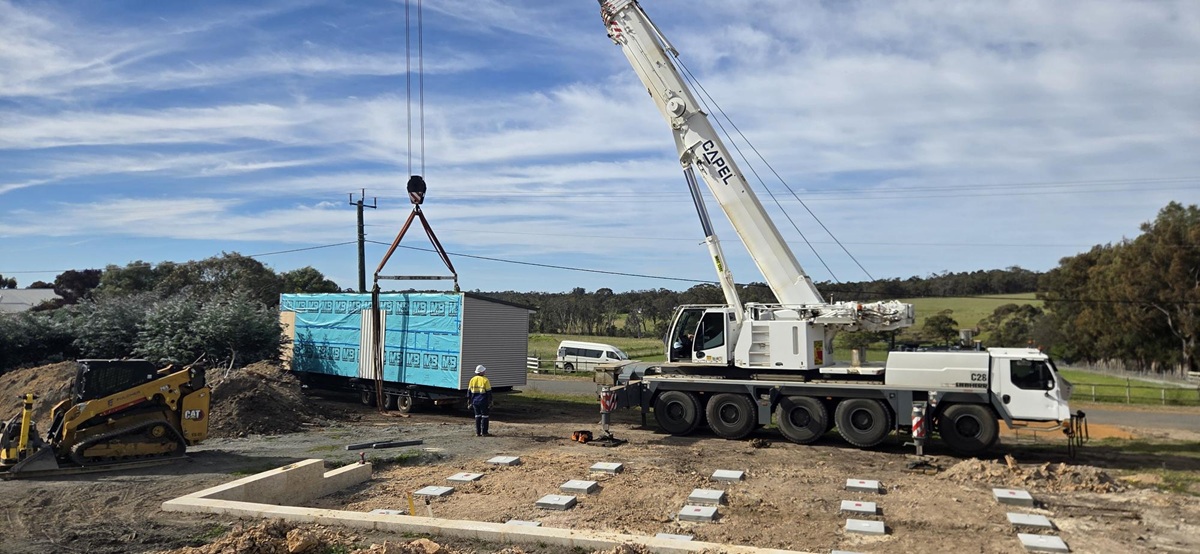
A common misconception is that because a modular building can be transported, it must be temporary. The truth is that a well-built modular home can last just as long as a traditional home.
For a properly designed and maintained modular cabin, 50 years or more is a reasonable expectation, with the potential to last much longer. The fact that it is built in a factory and delivered to site does not make it less durable. What matters more is the quality of the design, the materials used, how well it is engineered, and maintained over time.
How does it compare to traditional builds?
Modern residential modular homes often use many of the same materials as conventional housing, including durable framing, insulated walls, quality roofing, cladding, windows, and internal finishes. The difference is mainly the method of construction, not the standard of the finished home.
In fact, factory construction can offer some advantages because materials are protected during the build, quality checks can happen at each stage, and structural elements can be inspected before linings are installed.
What affects the lifespan of a modular home?
That said, the lifespan of a modular building is influenced by more than what happens in the factory. Transport, installation, and footings all play a major role. A home must be engineered for lifting and transport forces, supported correctly during delivery, and installed on suitable footings for the site conditions. If the building is not level, properly supported, or matched to the soil and wind conditions, its long-term performance can suffer.
Local conditions also matter, especially in Western Australia. Coastal environments can accelerate corrosion if the wrong materials are used, while inland and rural areas bring their own challenges such as UV exposure, dust, heat, and temperature changes.
In high-wind regions, the design must also account for stronger wind loads, roof connections, bracing, and tie-down requirements.
What about maintenance?
Maintenance is another important part of the picture. Like any home, a modular building still requires maintenance. Gutters need cleaning, drainage should be checked, sealants and penetrations should be inspected, and any leaks or damaged finishes need to be repaired promptly.
In exposed or coastal areas, external cladding may also need regular washing. It is also worth remembering that while the structure may last for decades, some components such as hot water systems, air conditioners, flooring, and external finishes may need replacement during the life of the building.
Conclusion
In many cases, a well-built modular home can last 50 years or more, just like a traditional house. Its lifespan depends less on the fact that it is modular and more on the quality of the design, materials, installation, site conditions, and maintenance over time.
Many of the things that shorten a modular building’s lifespan are easily avoidable. Poor installation, incorrect footings, water pooling around the building, unsuitable coastal materials, neglected maintenance, unapproved alterations, or poor handling during transport can all lead to premature deterioration.
That is why it is so important to choose a builder who considers engineering, manufacturing, delivery, installation, and long-term performance as one connected process. If you are looking for a modular home that will last for many years to come, talk to Aussie Bush Cabins about a solution designed for your site, your lifestyle, and WA conditions.