
What is a self-contained portable cabin?
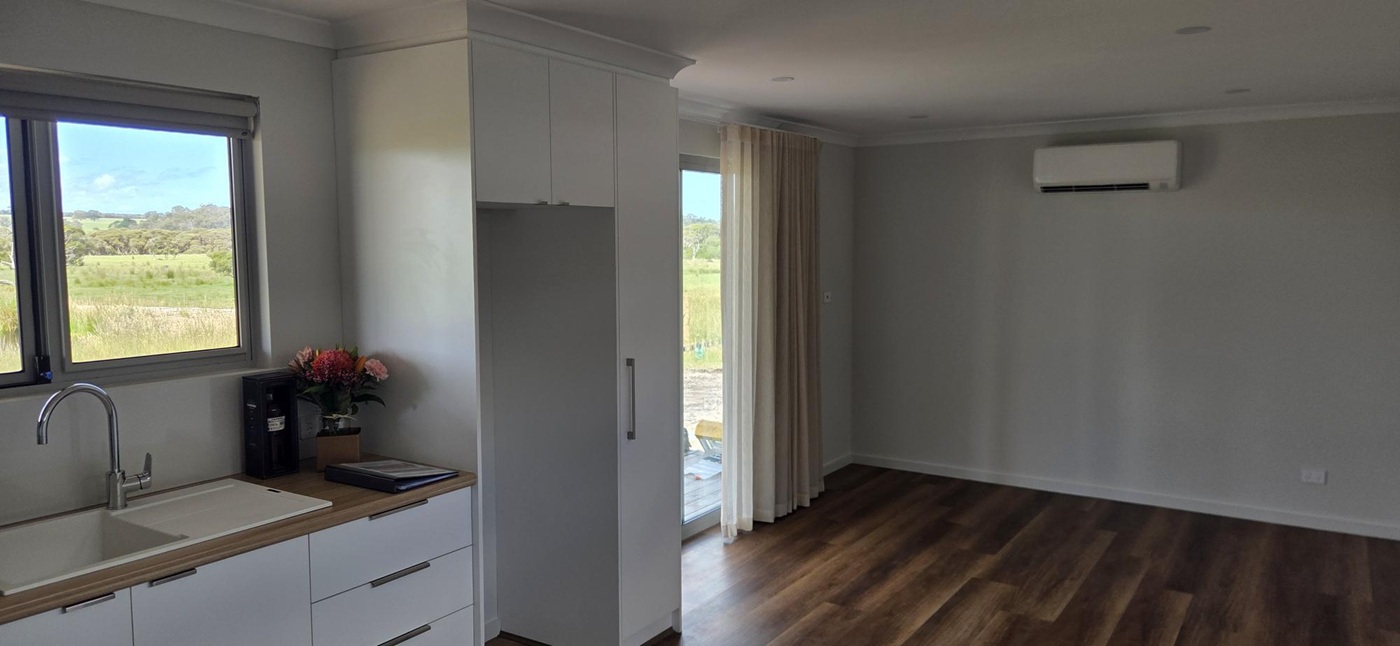
A self-contained portable cabin is a transportable building with its own sleeping space, kitchen or kitchenette, and bathroom with a toilet and shower. It allows occupants to stay independently without using another building’s facilities.
At Aussie Bush Cabins, many of our modular homes are self-contained. Our Bremer Bay holiday accommodation project is a good example. It combines a bedroom, ensuite, kitchen and living area, plus a washer/dryer, within one modular cabin.
What makes a cabin self-contained?
The important distinction is between extra space and independent accommodation. A room used for sleeping or working is not necessarily self-contained if occupants still need to visit the main house to cook or shower.
A self-contained layout brings those everyday activities together through:
- Sleeping space: either an open-plan studio arrangement or a separate bedroom.
- Kitchen facilities: somewhere to prepare meals, with the appliances and storage specified for that design.
- A private bathroom: including a toilet, shower and basin.
- Living space: somewhere to sit, eat and relax.
For those on a tighter budget, we have many cabins priced below $150,000 including compact studio and one-bedroom options with different combinations of living, kitchen and bathroom space. Be sure to check the individual floor plan and inclusions of each design.
Does self-contained mean off grid?
No. Self-contained refers to the facilities inside the cabin, not independence from electricity, water or wastewater services.
At Aussie Bush Cabins, final service connections form part of the on-site installation process as we mention in our transportable homes guide.
Portable also does not mean the cabin must have wheels. We build using steel framing in our warehouse before transporting and installing the cabin on site.
What can you use our cabins for?
Self-contained cabins can provide accommodation for family members, guests, farm workers or holiday visitors. The layout should reflect the intended occupants: occasional guests may need different storage, cooking and laundry facilities from someone living their full time. Our existing projects include both short-stay accommodation and owner-occupied homes.
For example, one of our Denmark projects was custom designed for an owner who planned to live in the cabin while family occupied the existing house. This provided separate living arrangements on the same property.
What should you check before buying?
“Self-contained” is a useful description, but it does not confirm that a cabin is suitable for every property or intended use.
Before committing, check the exact inclusions, delivery access, foundations and service connections. Also confirm the approval requirements for your proposal. Our guide to choosing a prefab home suitable for everyday living explains why a finished-looking building may still need additional work before occupation.
Looking for independent accommodation on your property?
Contact Aussie Bush Cabins for a free consultation to discuss a self-contained cabin suited to your site, budget and intended use.